
Feature Slides

Soil Analytics in India
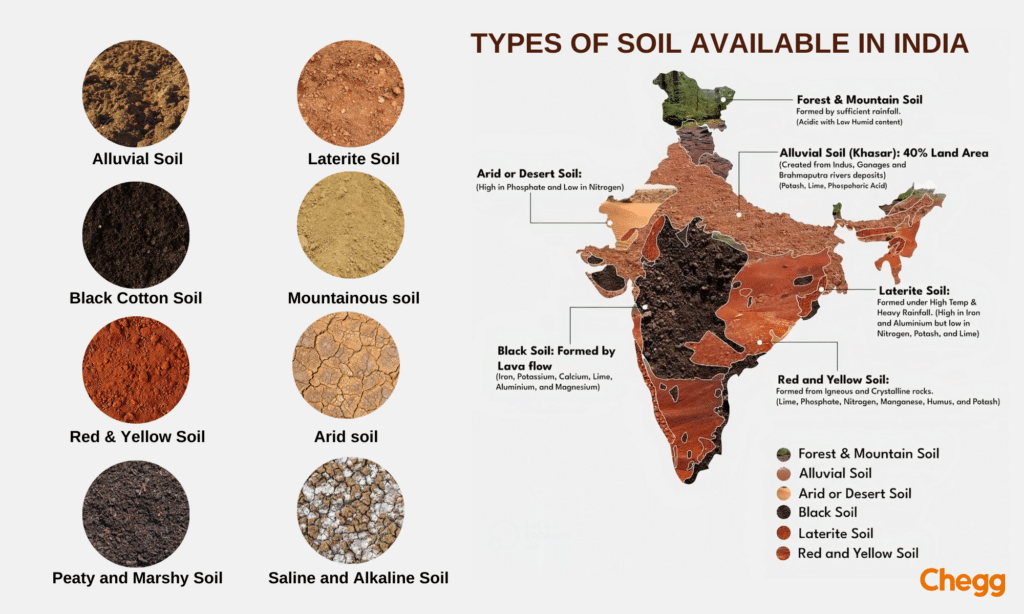
Different types of soil found in India are
1. Alluvial Soil: Found in river basins and coastal regions, highly fertile, and suitable for agriculture. It covers around 40% of India's land area.
PH Level: 6.5 to 8.0
2. Black Soil (Regur): Rich in clay, found in Deccan Plateau. Black cotton soil is highly argillaceous, moisture -retentive, and suitable for cotton cultivation.
PH Level: 6.5 to 8.5
3. Red & Yellow Soils: These soils occur in regions with moderate rainfall. Red soil is rich in iron and potash, while yellow soil contains less iron and is more acidic. Found in eastern and southern parts, rich in iron, less fertile.
PH Level: 6.5 to 7.5
4. Laterite Soil: Found in high rainfall areas, rich in iron and aluminum, suitable for crops like tea and coffee.
PH Level: 5.5 to 6.5
5. Desert Soil: Found in arid regions, sandy texture, low organic content, requires irrigation for cultivation.
PH Level: 7.0 to 8.5
6. Mountain Soil: Found in hilly and mountainous regions, varies in composition, supports horticulture.
PH Level: 5.5 to 6.5
7. Peaty and Marshy Soil: High in organic matter, found in areas with heavy rainfall and high humidity.
PH Level: 5.5 to 6.5
8. Saline and Alkaline Soil: Found in arid and semi-arid regions, high salt content, not suitable for most crops without treatment.
PH Level: 8.5 and above
Code Snippet
import matplotlib.pyplot as plt
import pandas as pd
data = {
    'State': ['Gujarat', 'Kerala', 'Karnataka', 'Goa', 'Tamil Nadu', 'Maharashtra','Average'],
    '1990': [34.43, 24.77, 33, 30.09, 30.90, 40.6,32.3],
    '2000': [69.03, 26.9, 37.1, 44.43, 36.55, 63.5,46.26],
    '2010': [71.15, 29.3, 38.9, 49.15, 39.1, 73.4,50.19],
    '2020': [75.39, 47.1, 51.3, 54.28, 68.3, 79.73,62.69]
}
df = pd.DataFrame(data)
plt.figure(figsize=(10, 6))
for state in df['State']:
    plt.scatter(df.columns[1:], df.loc[df['State'] == state, df.columns[1:]].values.flatten(), label=state)
plt.xlabel('Year',fontsize=12)
plt.ylabel('Erosion (Tonnes/hectare/year)',fontsize=12)
plt.title('Erosion Data Across *WGR States',fontsize=16)
plt.legend(title='State',fontsize=12)
plt.show()


August 03, 2024
Read more ...